Letterpress printed · since the 18th century
Felt is
Remembered.
You chose craft in a world of speed. We set metal by hand and drive it into cotton hard enough to read with a fingertip.
A letterpress studio
Born in India
How the work is made
01 / The forme
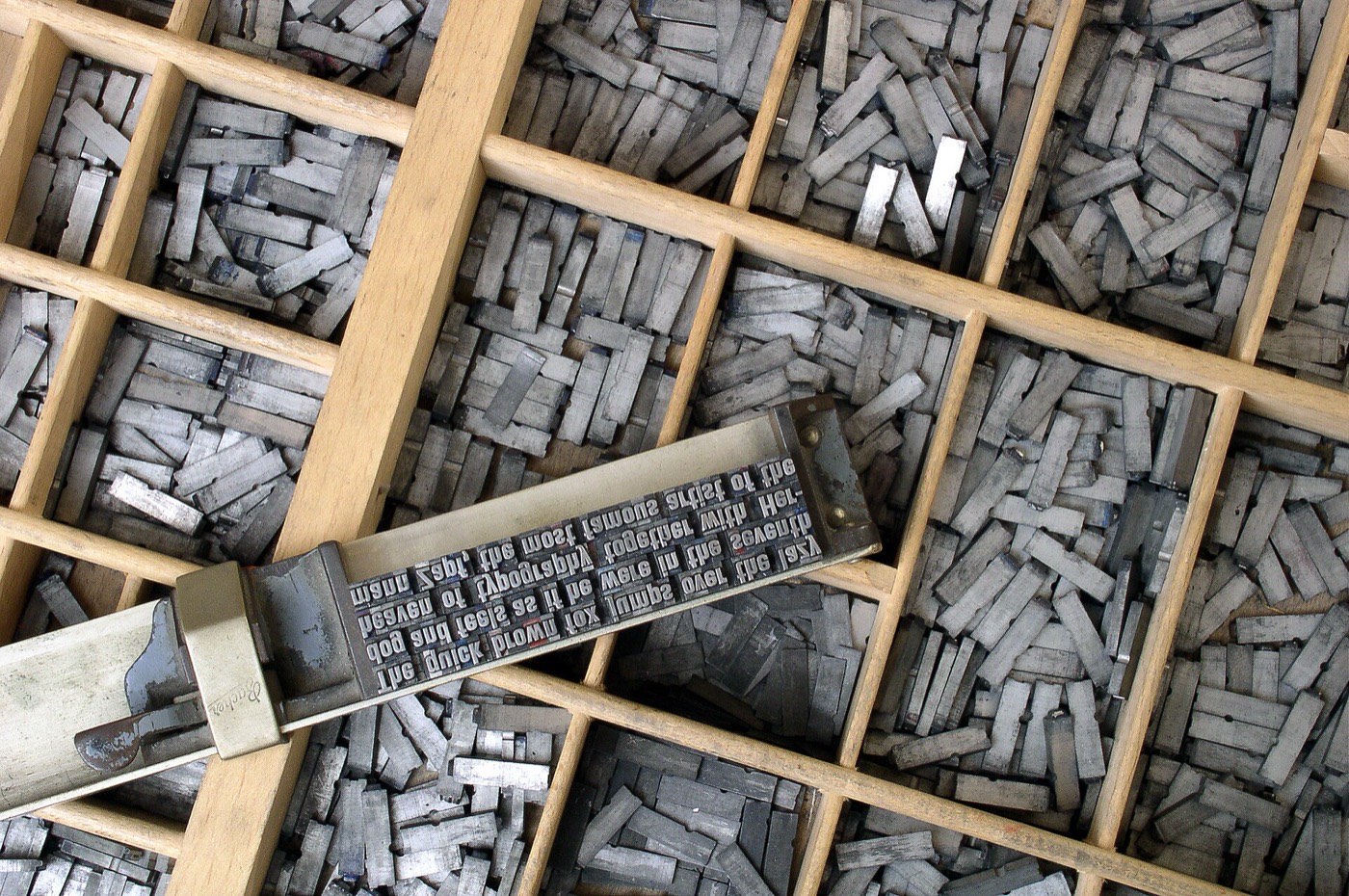
Every letter is a piece of metal.
Type is picked out of the case one sort at a time and stood in a composing stick, backwards and upside down. Spacing is settled at the bench with strips of lead, not nudged afterwards on a screen.
02 / The lock-up
Locked in iron, packed out with wood.
The set type goes into a chase, is packed with furniture and driven tight with tapered wedges. Done properly you can lift the whole page by one corner and nothing shifts.
03 / The impression
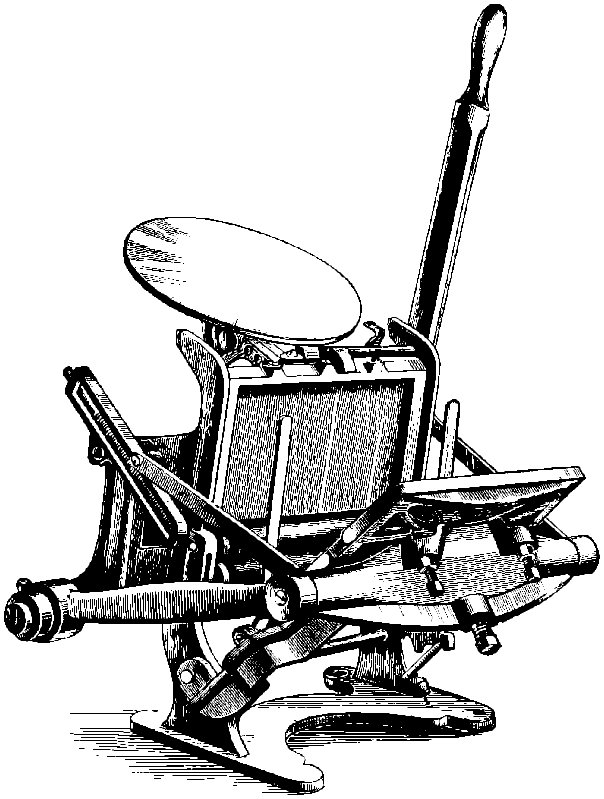
Then the platen closes.
Depth is set by the packing behind the platen and adjusted in fractions of a millimetre. Too little and the card reads flat. Too much and the counter of every letter punches through.
04 / The sheet
You can read it with your fingers.
Soft cotton takes the hit and closes around the letter. That dent was considered a fault for four centuries. It is now the reason anyone orders the work at all.
1455
The method
Unchanged in every way that matters. Metal, pressure, paper.
640
Grams per square metre
Cotton thick enough to take a bite and hold the pressed edge crisp.
1
Press, hand fed
One sheet in, one sheet out, and somebody standing there for every one.
What it is made of
Paper you can feel before you read it.
- Stock
- Cordenons Wild, 35% cotton fibre
- Certification
- FSC, responsibly managed forests
- Chemistry
- Neutral pH, acid free
- Ink
- Carbon black, mixed by eye
© 2026 House of Press Developed by Jami and Corp