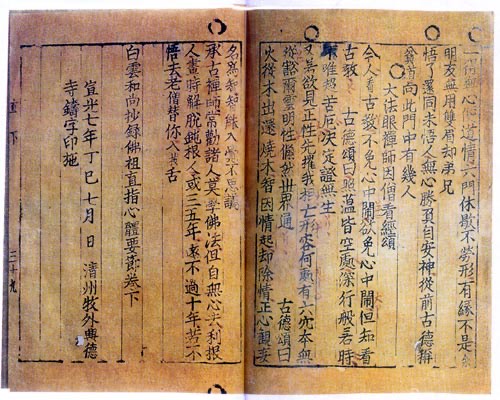
Cast in Korea · 1377
Seventy eight years before Mainz.
Korean foundries cast the Jikji in movable metal type. Two volumes were printed and one survives, which is seven hundred years of luck on top of the invention.
Six hundred years of the impression
Cast metal, a screw, and enough pressure to drive a letter into wet paper. The idea has not changed since 1377. What changed is who needed it.
Scroll to walk · move the pointer to look
Cast in Korea · 1377
Korean foundries cast the Jikji in movable metal type. Two volumes were printed and one survives, which is seven hundred years of luck on top of the invention.
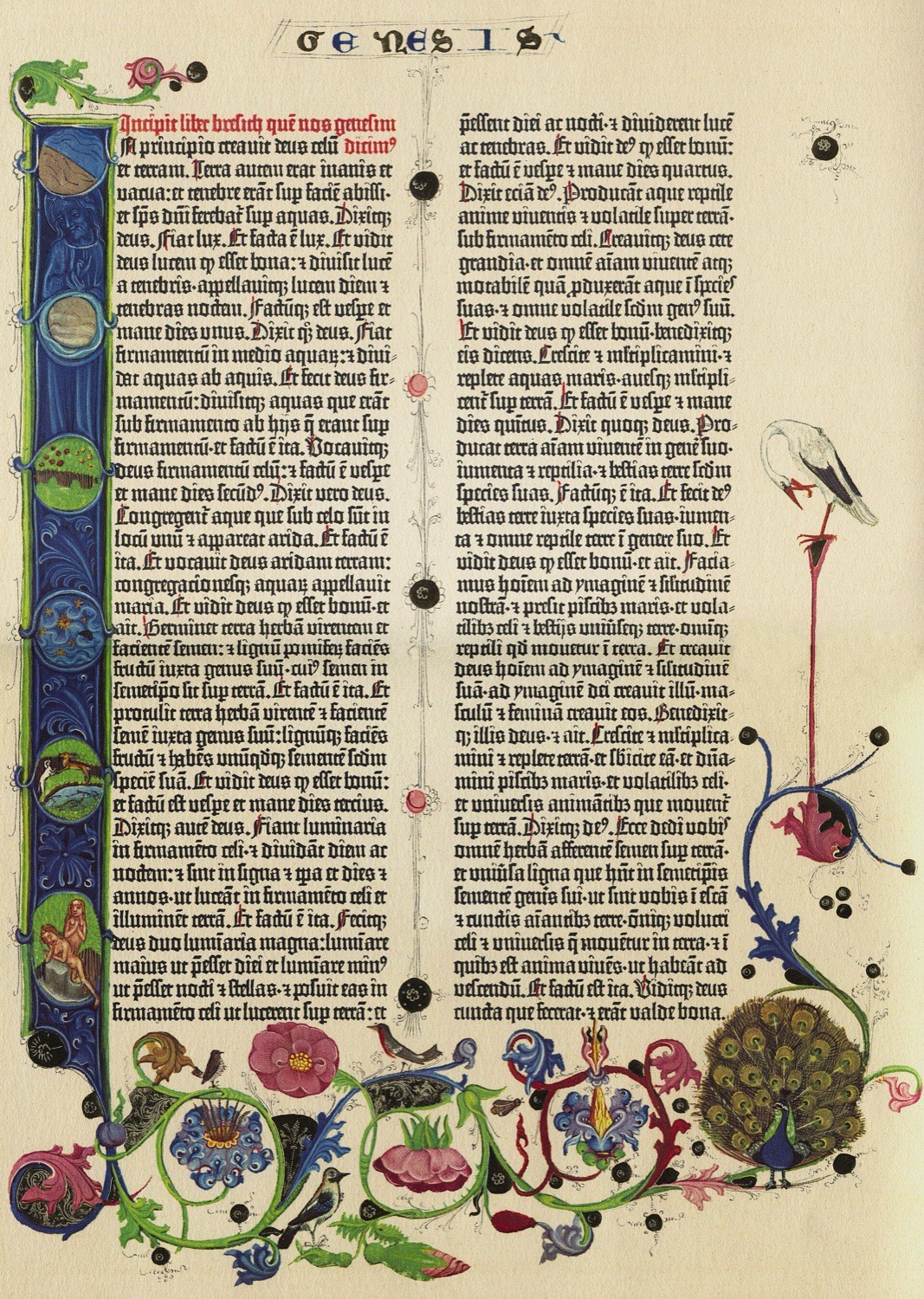
Mainz, about · 1440
Screw presses had been squeezing olives for centuries. Gutenberg's contribution was the hand mould: a way to cast any letter to exactly the same height, so a page could be locked solid and pulled flat.
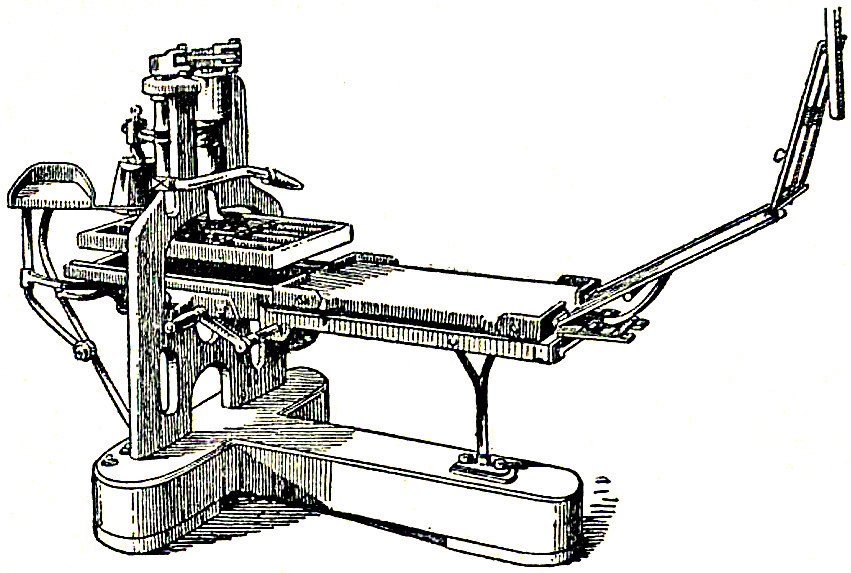
Iron, from · 1800
Stanhope's iron frame took a whole forme in one pull instead of two, and stopped the press flexing away from the paper under load. The impression got even, and stayed even.
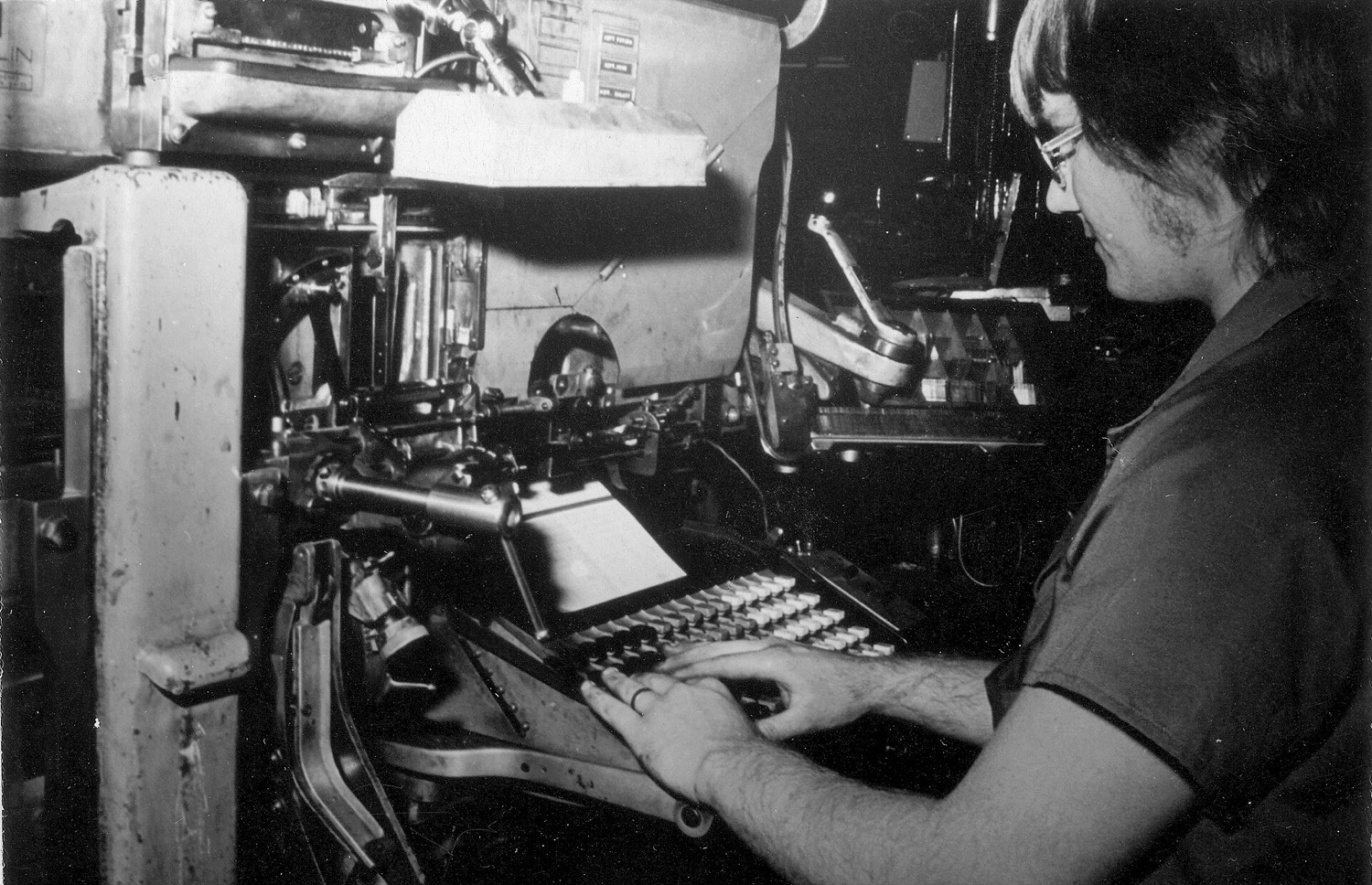
The machine age · 1886
The Linotype cast a whole line as one slug of hot metal from brass matrices. Newspapers quadrupled inside a decade, and hand composition became a specialism overnight.
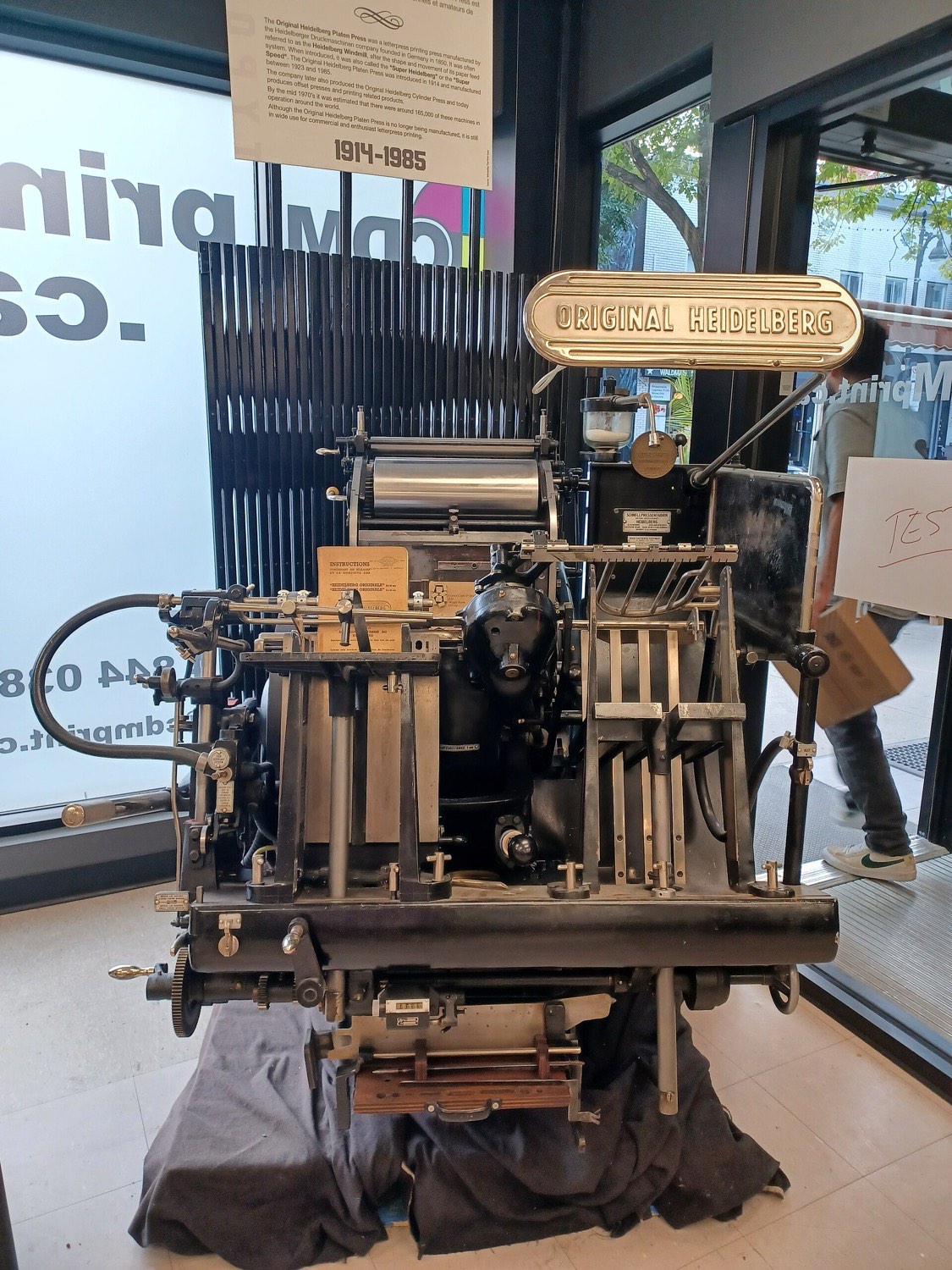
The jobbing years · 1905
The platen jobbing press put letterpress behind every counter in the country: bill heads, tickets, invitations, cards. It is the machine this studio still runs.
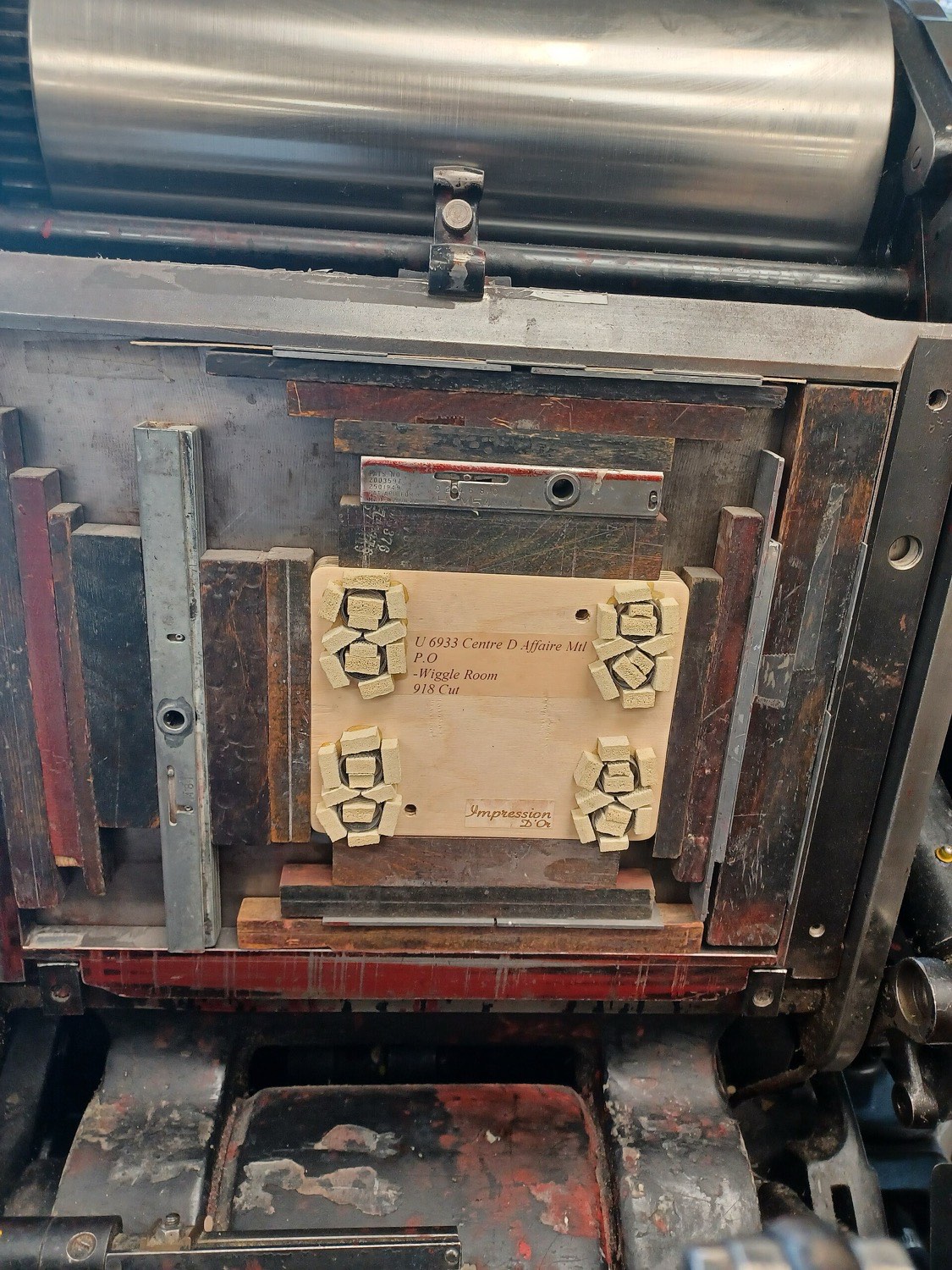
Still running · Today
Offset made all of it worthless, and then, once nothing was printed this way, the way it looked stopped being ordinary. The dent that was a defect for four centuries is now the whole point.
© 2026 House of Press Developed by Jami and Corp